
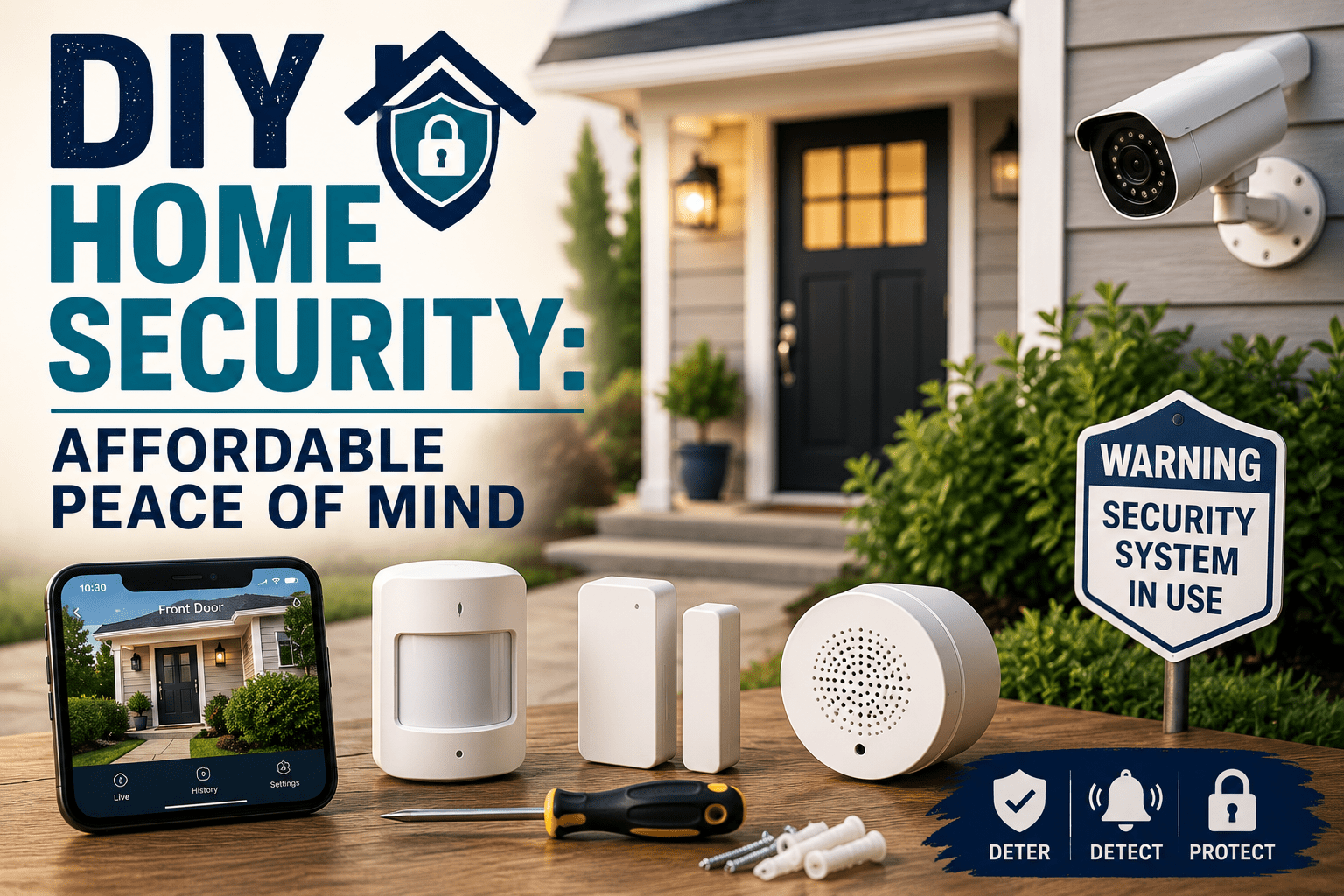


Image credit: Unsplash
Keeping your home safe is a top priority for any homeowner, but it doesn’t have to mean signing up for expensive, long-term contracts. With a bit of know-how and some smart choices, you can significantly boost your home’s security on a budget. This guide will walk you through practical, affordable DIY solutions to help you protect your property and gain valuable reassurance.
Assessing Your Home’s Vulnerabilities
Before you can effectively secure your home, you need to understand its weak points. The best way to do this is to take a walk around your property, both inside and out, and try to think like a potential intruder. Where would be the easiest point of entry? What areas are hidden from view?
Start with the basics: doors and windows. Check that all external doors have sturdy, modern locks. A deadbolt is a must-have for primary entry points. Inspect window latches, especially on the ground floor or those accessible from a balcony or flat roof. Sliding glass doors can be particularly vulnerable, so consider adding a security bar in the track.
Next, look at your home’s exterior. Are there overgrown shrubs or trees that offer convenient hiding spots near windows or doors? Is there a dark, unlit path along the side of your house? An unlit entryway or back garden is an open invitation. Identifying these blind spots and areas of poor visibility is a key part of assessing your home security. Make a list of every potential vulnerability you find. This list will become your action plan for making targeted, cost-effective improvements.
Budget-Friendly Deterrents That Work
Once you’ve identified your home’s weak spots, you can start implementing deterrents. Many of the most effective security measures are surprisingly low-cost and focus on making your home a less appealing target. The goal is to create enough obstacles and risks that an intruder decides to move on to an easier property.
Begin with physical reinforcements. Upgrading the screws in your door’s strike plate to longer, more robust ones can make it much harder to kick in. For windows, you can apply a security film that makes the glass more difficult to shatter. These films are clear and relatively inexpensive, adding a strong layer of protection without changing the look of your home. You can also find a wide variety of affordable home security products online that are designed for easy DIY installation.
Lighting is another powerful and cheap deterrent. Motion-activated floodlights for your driveway, back garden, and side paths are brilliant for startling intruders and drawing attention. Inside, using simple timers on a few lamps can create the illusion that someone is home, even when you’re out for the evening or away on holiday. Finally, consider your landscaping. Planting thorny bushes like bougainvillea or roses under ground-floor windows can create a painful, natural barrier.
Easy-Install Alarms and Sensors
You don’t need a complex, professionally installed system to benefit from alarms. Home security has evolved considerably from traditional professionally installed alarm systems, with DIY sensors, cameras, and connected devices now giving homeowners many more options. HomeTechHacker’s look at the evolution of home security from alarms to AI-powered systems provides more background on that shift.
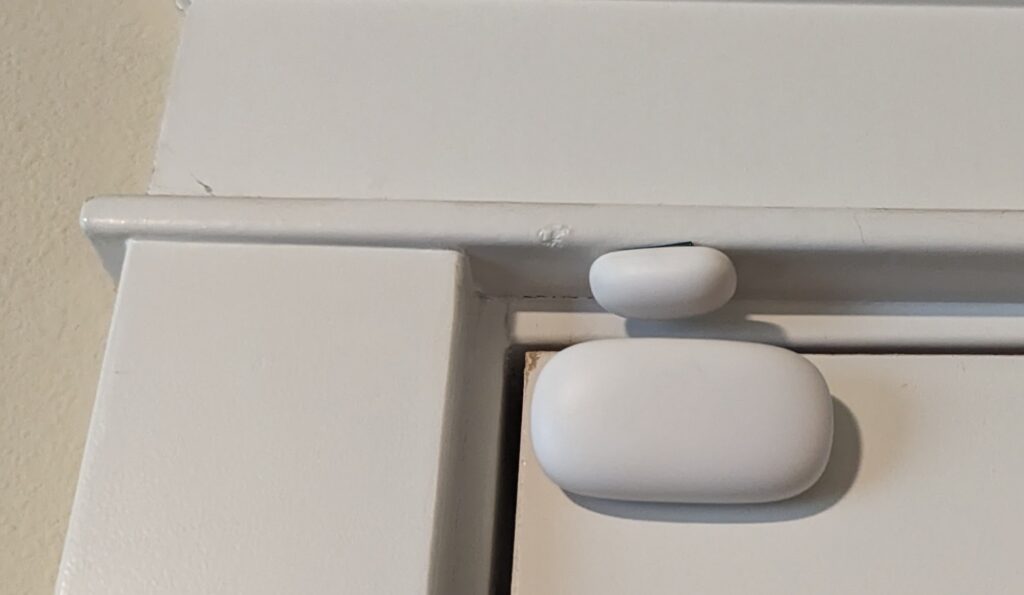
The simplest options are contact sensors for doors and windows. These usually come in two parts; one attaches to the frame and the other to the door or window itself. When the two parts are separated, a loud siren, often over 100 decibels, is triggered. The piercing noise is often enough to scare off an intruder and alert you or your neighbours to the problem. You can buy these in multi-packs to cover all your ground-floor entry points for a minimal cost.
For larger spaces like a garage, shed, or open-plan living area, a motion-activated alarm can be a great choice. These standalone units detect movement within a certain range and set off a siren. They are perfect for areas you don’t use constantly but want to keep secure. When looking at different options, it’s worth checking out reviews and comparisons to find the best home security system for your specific needs, as many now include easy-to-install components.
Creating a Visual Security Presence
Sometimes, the appearance of security can be almost as effective as the real thing. Burglars are often looking for the path of least resistance, and a home that looks well-protected is one they are likely to skip. Creating a strong visual security presence is a psychological tactic that costs very little.
One of the most common methods is using dummy security systems. These non-functional replicas look identical to real cameras, complete with flashing red LED lights to simulate recording. Placed in visible locations, such as under the eaves of your roof or near the front door, they can act as a powerful deterrent. While a seasoned thief might be able to spot a fake, many opportunistic intruders will not take the chance. For just a few dollars, it’s a worthwhile investment.
Another simple but effective tool is the use of security signs and stickers. Placing a sticker on a window or a small sign in your front garden that warns of an alarm system or CCTV surveillance can make a potential intruder think twice. They don’t know if the warning is real or not, and the uncertainty itself is a deterrent. Combining these visual cues with a well-maintained property, a mown lawn, trimmed hedges, and no overflowing rubbish bins sends a clear message that the home is occupied and cared for, making it a much less attractive target.
Smart Monitoring Without Monthly Bills
The rise of smart home technology has opened up a world of advanced security options that don’t lock you into costly monthly subscriptions. Smart devices can also improve safety in ways that go beyond preventing break-ins, as HomeTechHacker covers in 9 Ways a Smart Home Improves Safety and Security.
Smart security cameras and video doorbells are a prime example. These devices connect to your home Wi-Fi and allow you to view a live feed from your smartphone, no matter where you are. When they detect motion, they can send an instant alert to your phone. The key is to choose models that offer local storage options, such as a slot for a microSD card. This means the video footage is saved directly on the device, so you can access it without paying for a cloud storage plan.
Editor’s note: Trying to decide which security cameras are right for your home? HomeTechHacker’s Wi-Fi Surveillance Camera Advisor can help you narrow down your options based on your needs, preferences, and budget.
Since cameras and video doorbells are also network-connected devices, don’t overlook their cybersecurity. HomeTechHacker’s guide to protecting a home network from IoT device hacking explains some practical ways to isolate and secure connected devices.
Video doorbells are particularly useful, allowing you to see and speak with whoever is at your door through your phone. This is not only convenient for package deliveries but also a great way to vet unexpected visitors without opening the door. You can also use smart plugs to enhance the illusion of occupancy. Plug lamps into them and use an app to turn them on and off randomly or on a schedule, making it look like someone is moving around inside the house. These smart, one-off purchases give you a high-tech security setup without the long-term financial commitment.
Taking a few of these simple, affordable steps can make a significant difference in how secure your home is. You can start small by addressing the most obvious vulnerability and gradually build up your defences as your budget allows.
diy-home-security-affordable-peace-of-mind